
Most of us treat dining room design like a formality in a floor plan. We buy the set, center the rug, and think we’re done. But a room that’s technically finished can still feel oddly sterile. It’s because we often design for the eyes rather than the elbows and forget that a dining room was meant to create a sensory experience.
Interestingly, there’s a design philosophy called “prospect and refuge” that suggests we feel most at ease when our seating is tucked in and protected, yet offers a clear view of the room. It’s why everyone fights for the booth at a restaurant.
When you apply that to a home – mixing heavy, tactile woods with soft, low-slung lighting – you create a sense of closeness that makes people linger. Which explains why Don Macciocca, West Elm’s senior vice president of merchandising, calls the dining room a “renewed destination in the home.” It isn’t merely a pass-through between the kitchen and the couch, but a place you settle into.
Let’s make yours somewhere people settle in and stay with some cozy dining room ideas!
Start With the Right Dining Table
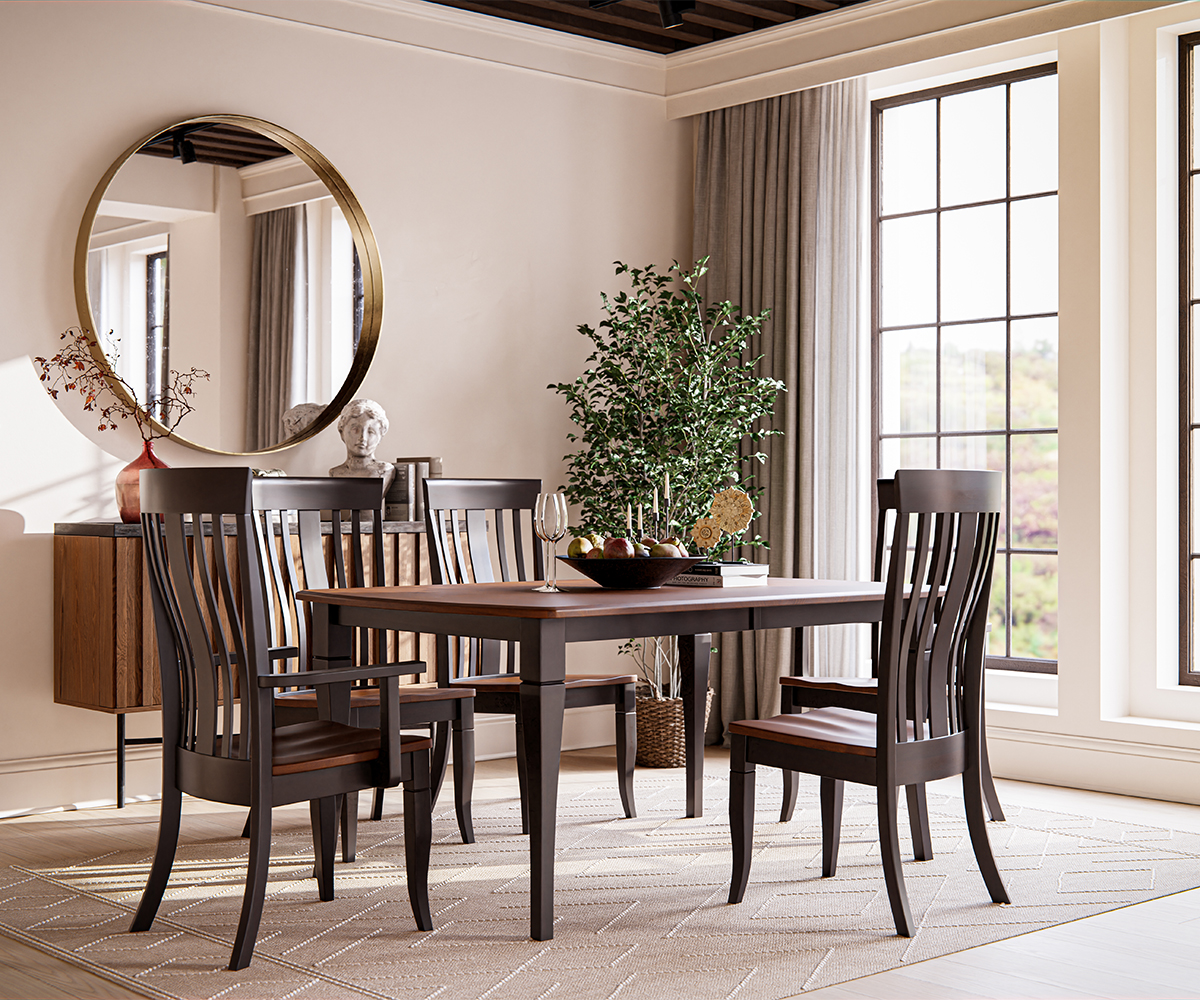
The dining table dictates how every other element in the room looks. If the table is too bulky, the room feels claustrophobic; if it’s too small, the space feels driftless. You need enough clearance for people to pull out a chair without hitting a wall or, worse, getting trapped in a corner. In a 10×12 room, a 72” table allows better flow than a 96” table.
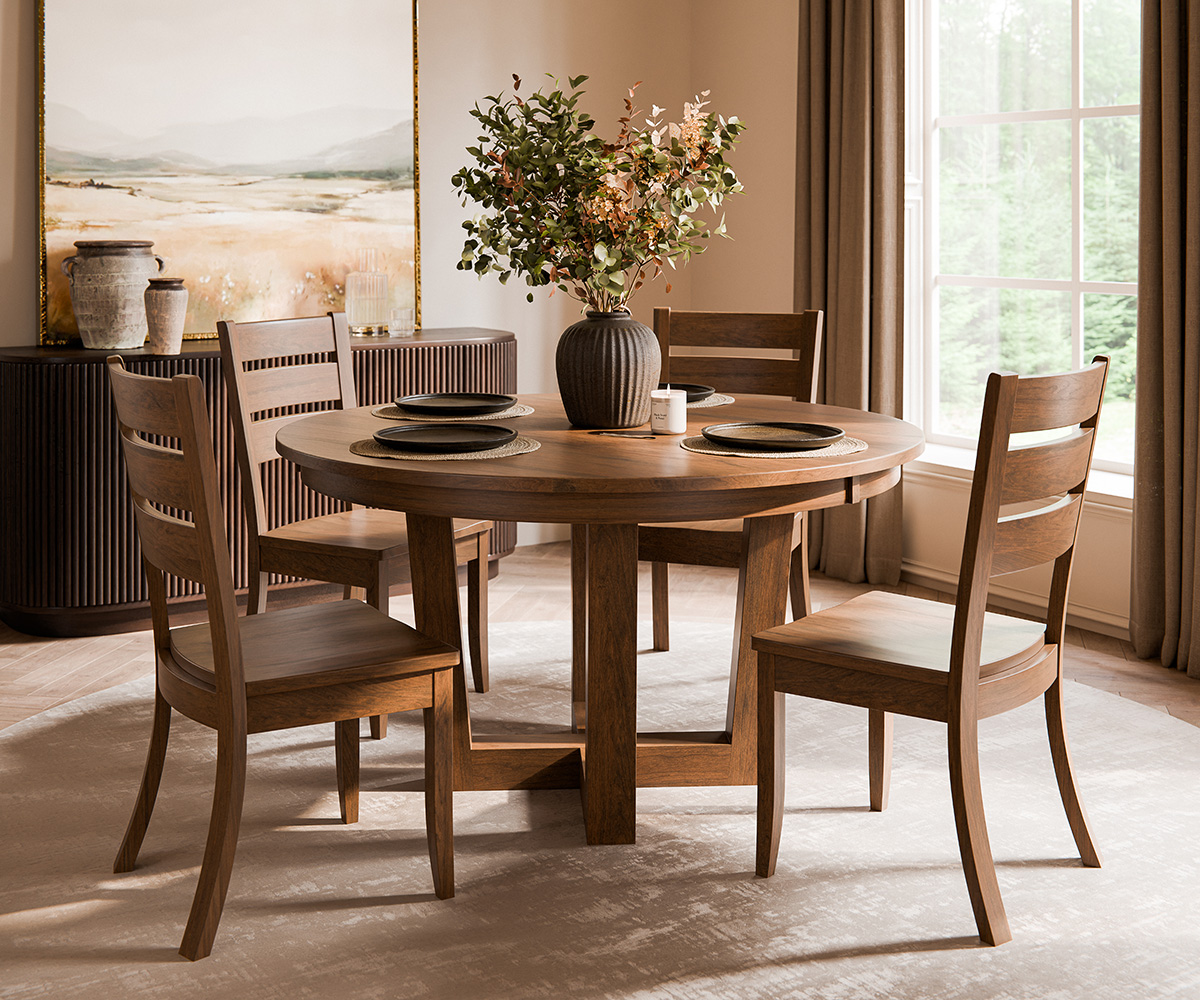
Further, shape plays a huge role in the social physics of your home. A round table is a great option for meaningful conversation because it brings everyone together around a central point, while a rectangular table provides a classic, structured feel for larger groups.
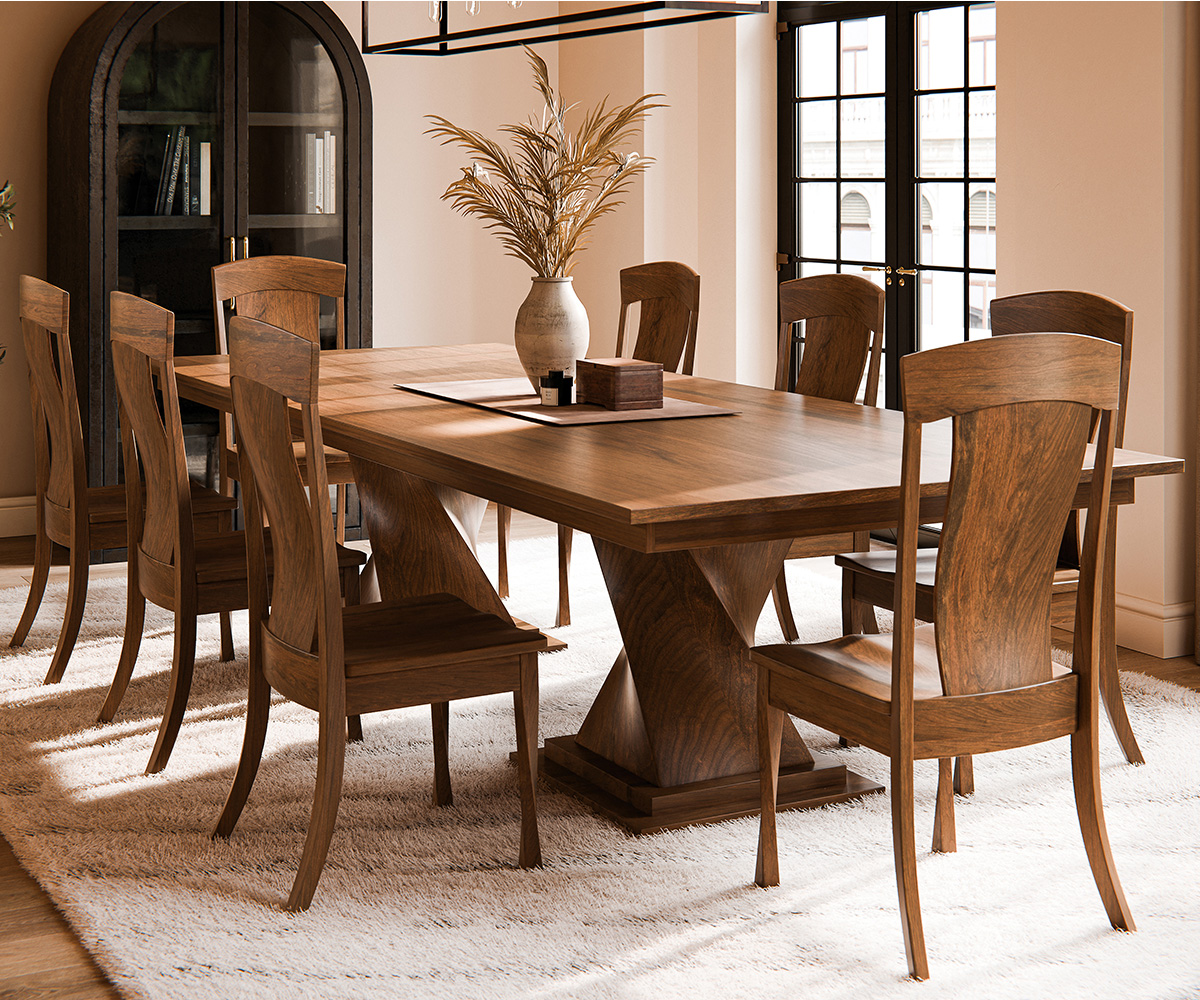
But the real secret to a welcoming vibe is the material. Solid wood – specifically the kind of heirloom-grade timber you find in Amish furniture – has a tactile warmth. There’s a groundedness to real hardwood because it ages gracefully, and every scratch and dent becomes part of its story.
Choose Comfortable, Inviting Seating

Chairs are the difference between a quick fifteen-minute meal and a three-hour conversation. If the seating is stiff or purely aesthetic, your guests will start eyeing the door the second the dessert plates are cleared. Comfort is a literal prerequisite for connection.
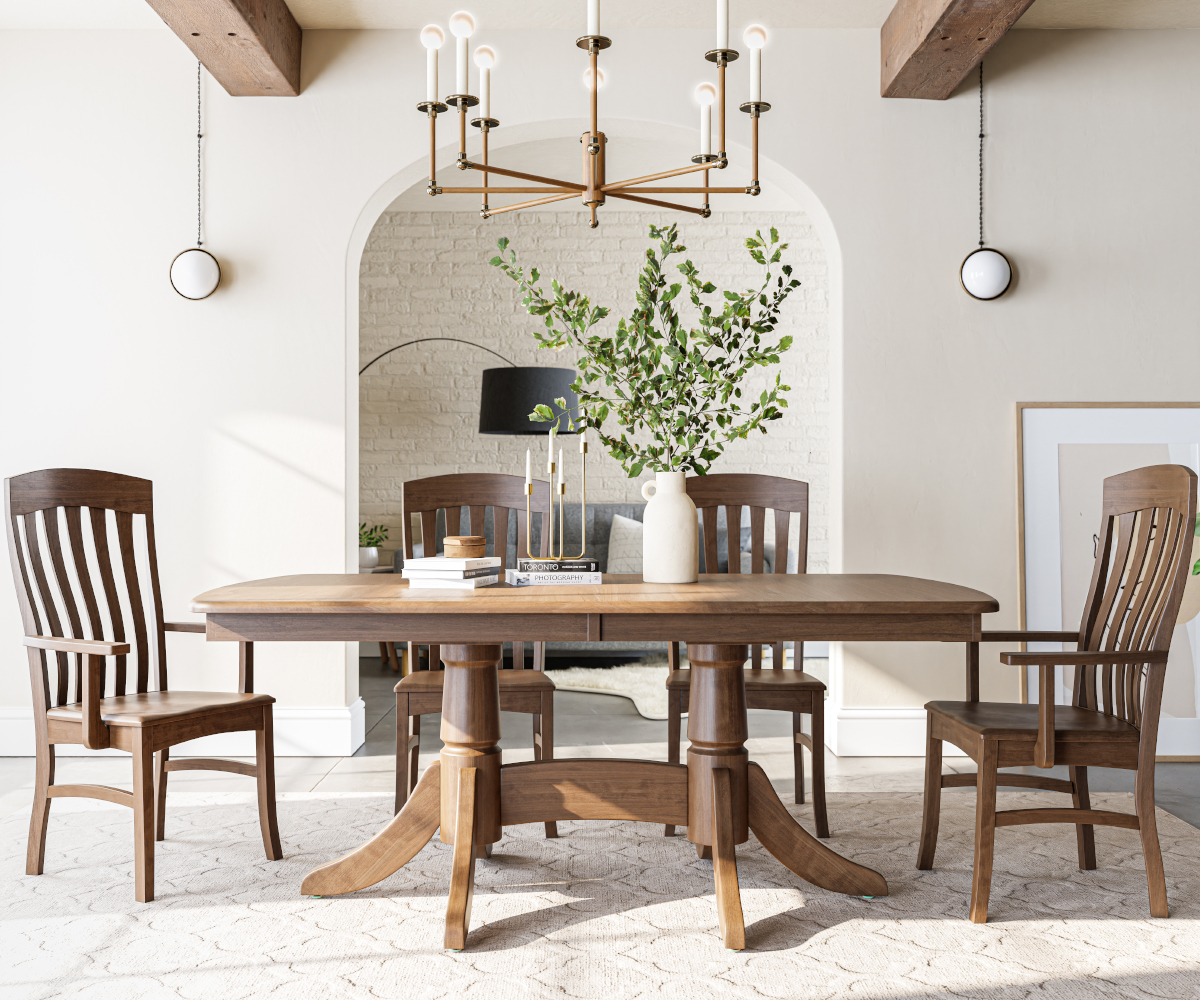
To break up the visual hardness of a dining room, you have to play with textures. Upholstered chairs are the gold standard here because they soften the room both physically and visually.
But don’t feel like you have to stick to a rigid, matching set. Mixing in a wooden bench or a built-in banquette adds a lounge-like warmth that feels much more approachable.
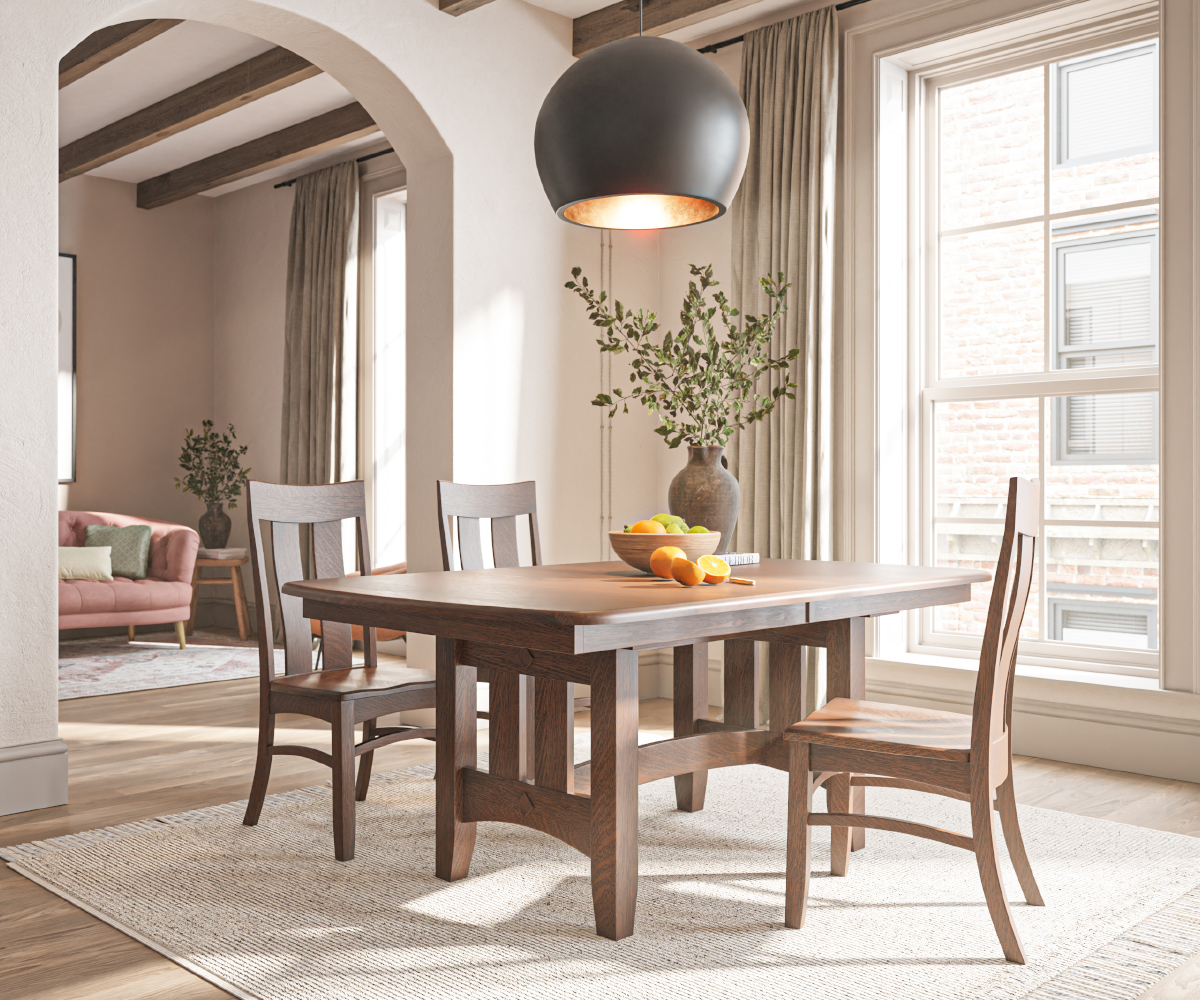
A little variation in your seating (maybe a slight shift in fabric or silhouette) tells people the room was curated over time, not bought in a box. It makes the space feel lived-in and, most importantly, like a place where they’re allowed to get comfortable.
Use Warm Colors & Natural Materials
Your color palette sets the emotional temperature before anyone even sits down. If you go heavy on stark whites and clinical, blue-toned grays, your room might appear clean, but it’ll look physically cold. Ideally, you need to lean into a palette that feels as if it were pulled from the earth.
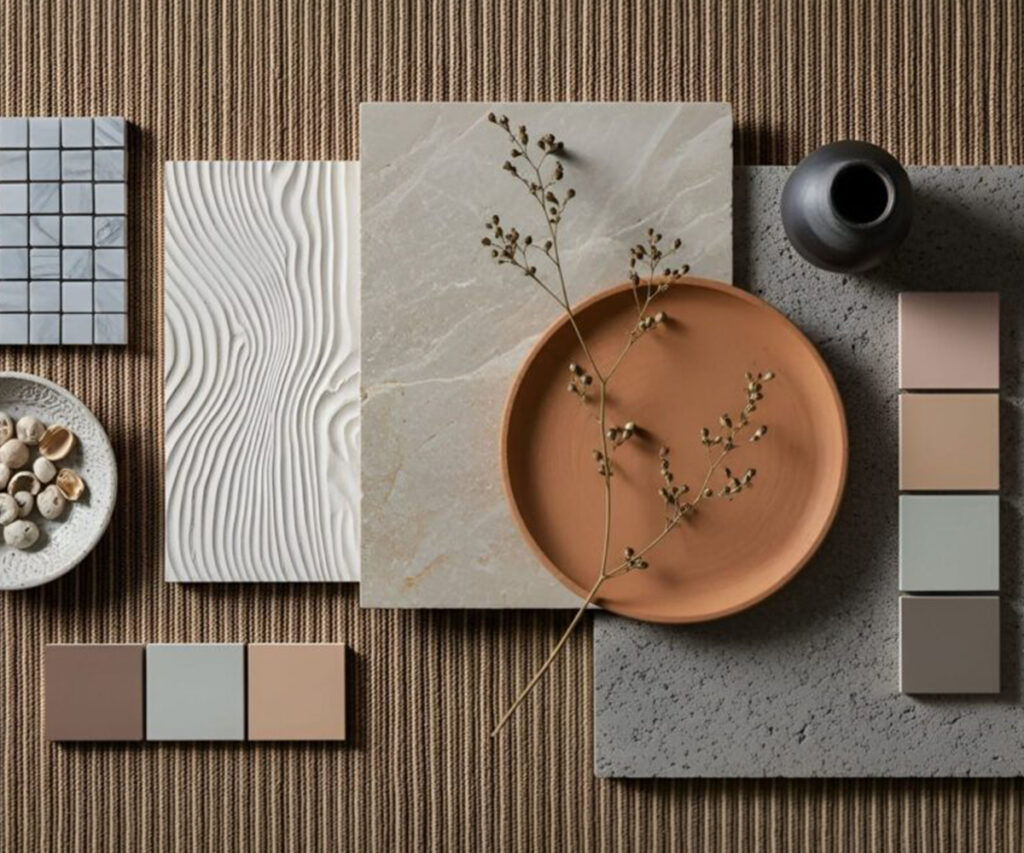
Here’s how to build that depth:
- The Foundation: Start with warm neutrals like oatmeal, terracotta, or deep, mossy greens. Ogla Doykhen, a Los Angeles-based interior designer, told Elle Decor that colors like muted greens and chocolate browns “have a timeless quality that creates a setting where you and guests want to linger.” These hues absorb light rather than bouncing it harshly off the walls, making the room feel more intimate.

- The Texture: Bring in natural fibers like linen curtains or a jute rug. These elements break up the flat surfaces and give the eye something interesting to land on.
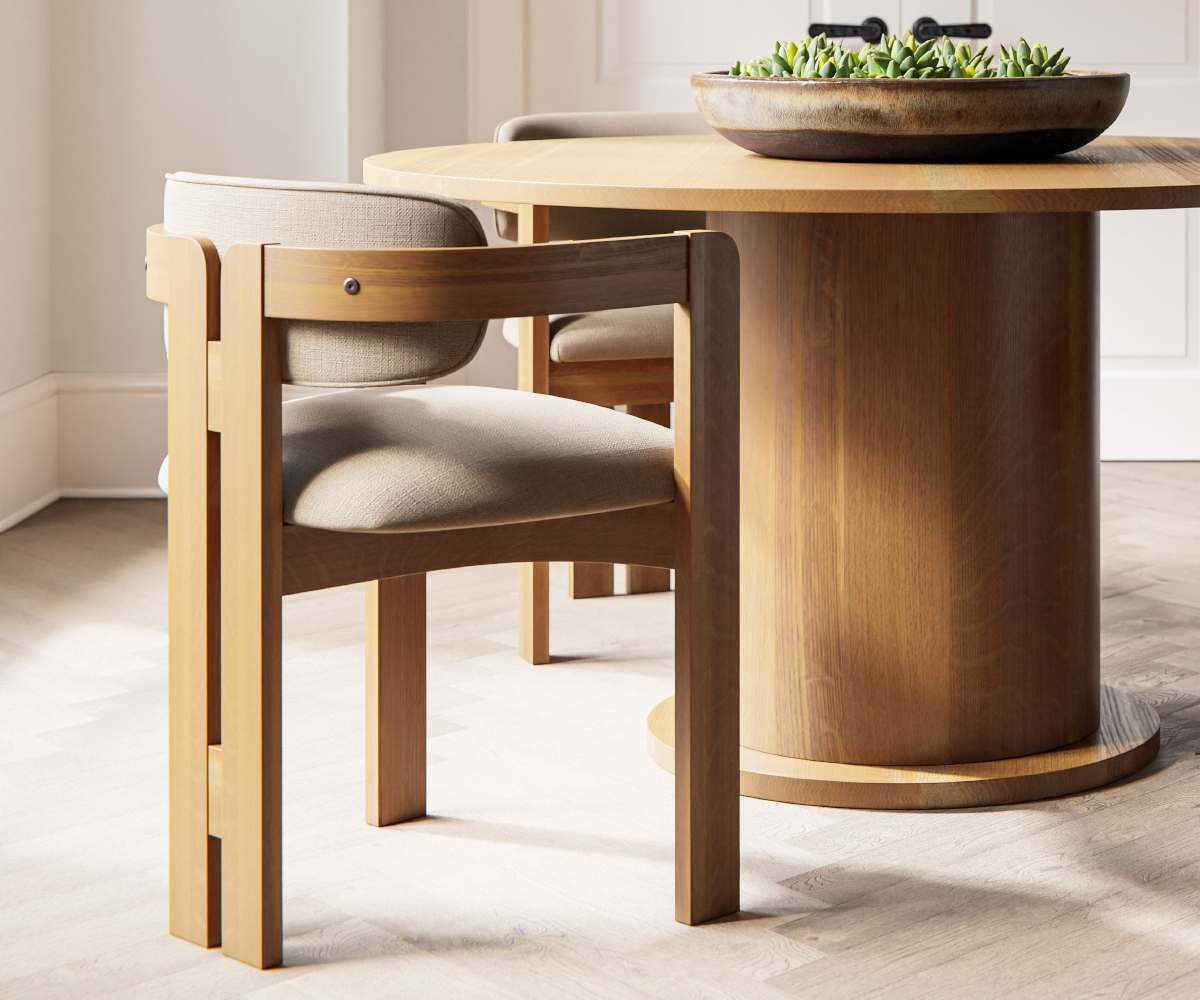
- The Authenticity Factor: This is where that Amish-style timber really shines. There is a raw, visual heat in authentic wood grain that synthetic finishes can’t replicate.
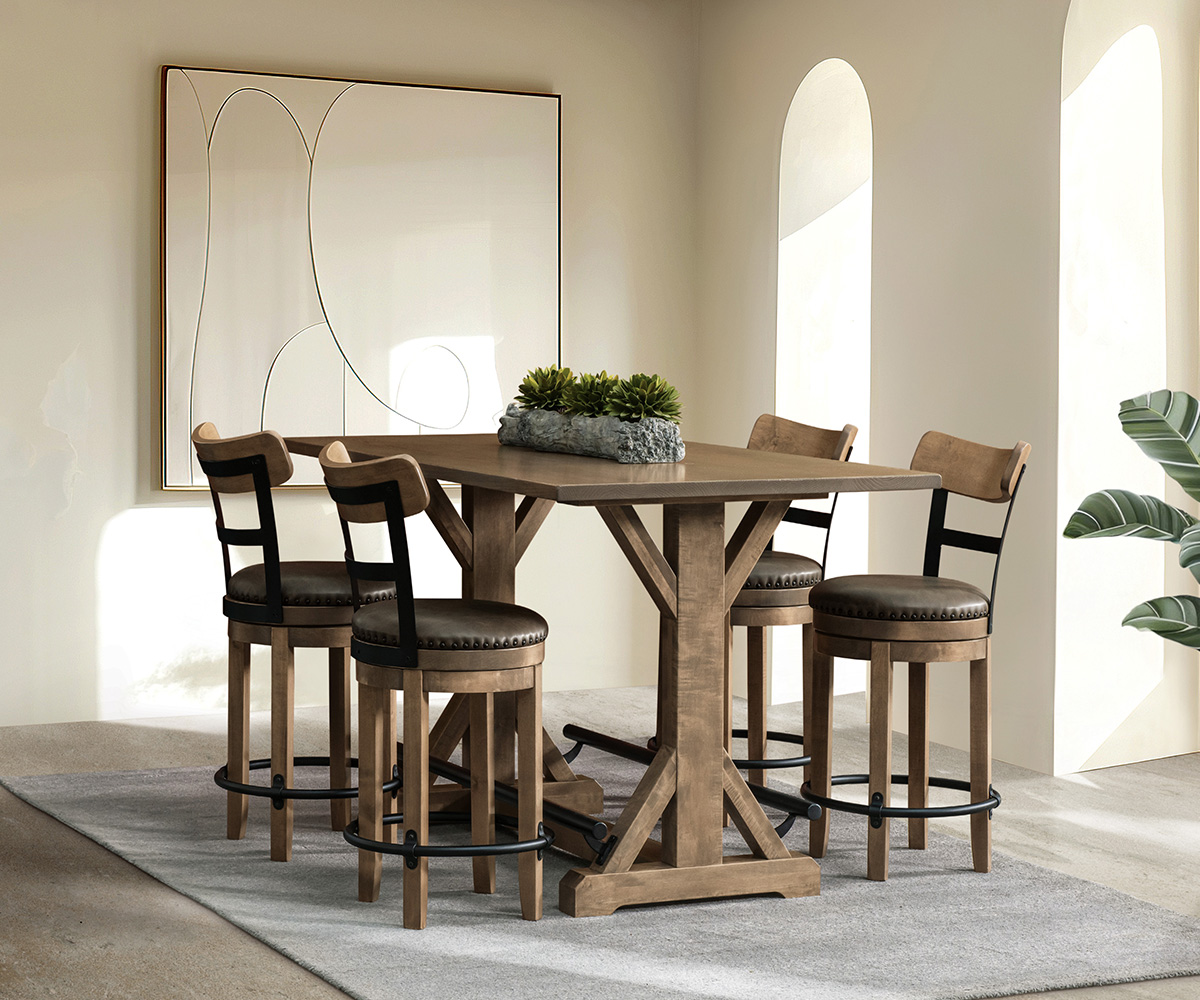
Natural materials like leather and solid wood add warmth just by existing. When you see the swirl of a real grain or the weave of a heavy fabric, your brain naturally registers it as “safe” and “homey.”
Layer Lighting for Atmosphere
Lighting is quite literally the biggest mood driver in the room, and yes, that includes your personality. You could have the best jokes in the world, but if you’re telling them under a single, flickering fluorescent bulb, everyone is going to feel awkward and on edge.
To get that glow, you have to move away from the big light and start thinking in layers.
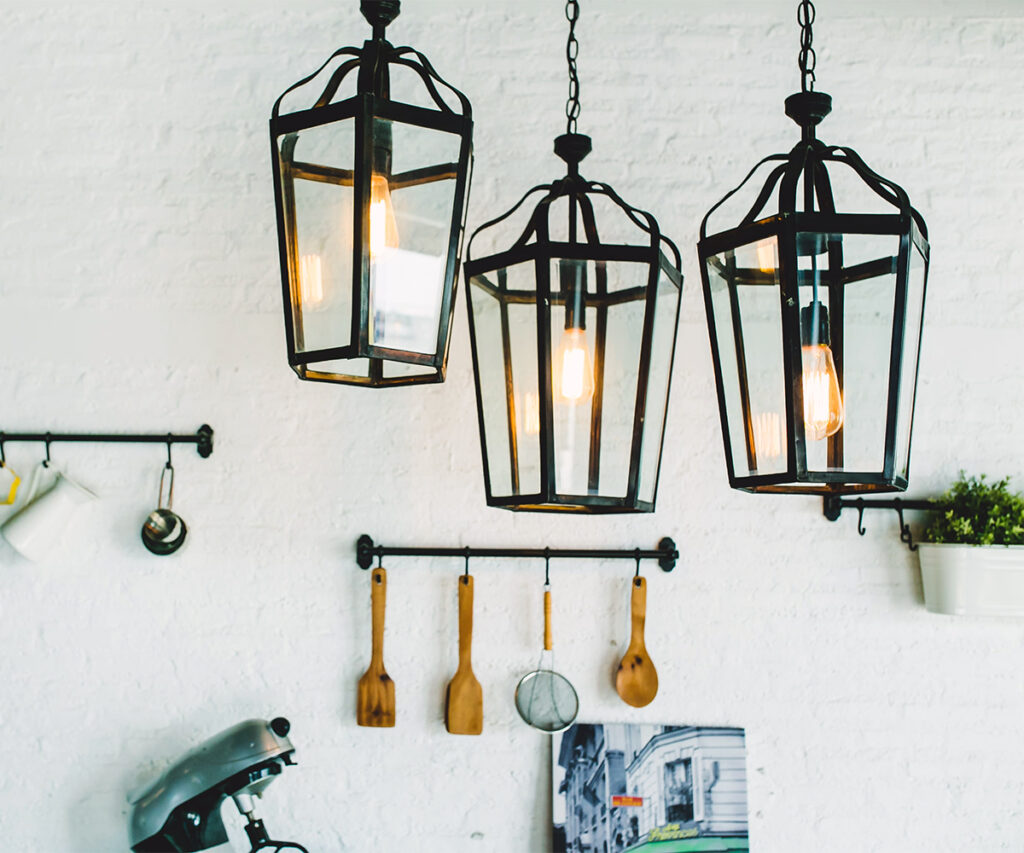
- The Ambient Layer: This is your overhead chandelier or pendant. It’s the baseline, but it shouldn’t do all the heavy lifting.
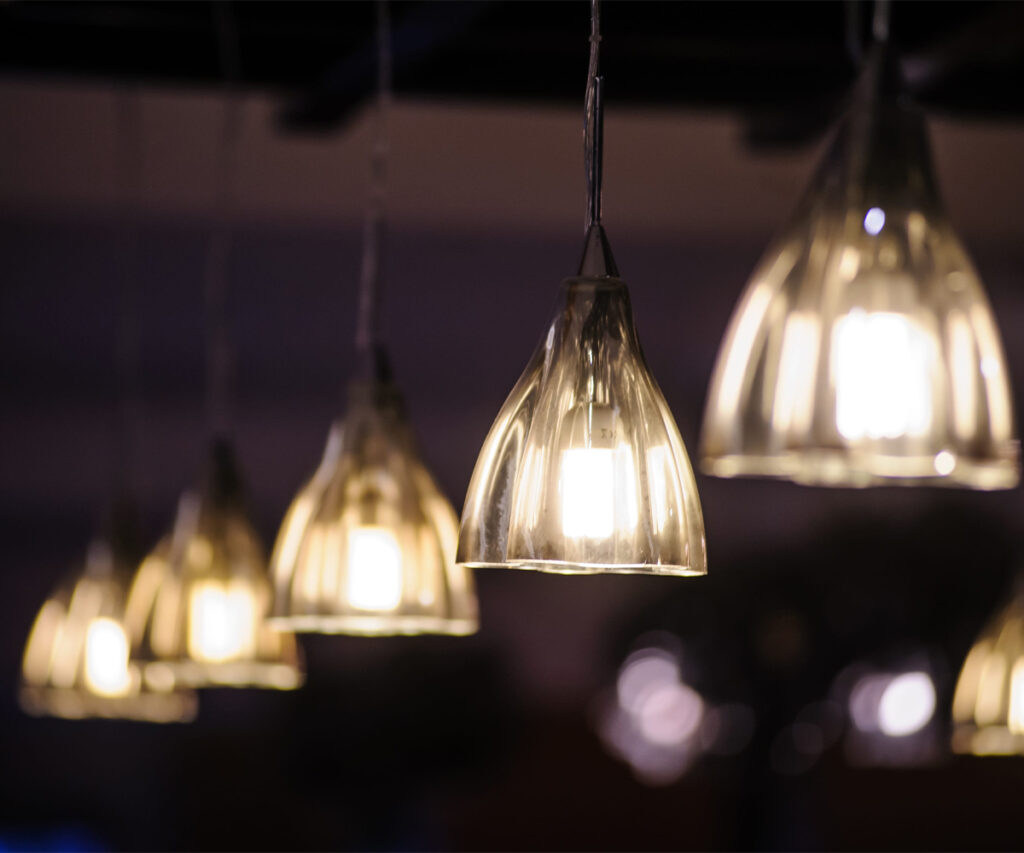
- The Task Layer: This focuses the light exactly where it matters – on the table itself. It highlights the food (and the faces) without blinding anyone.
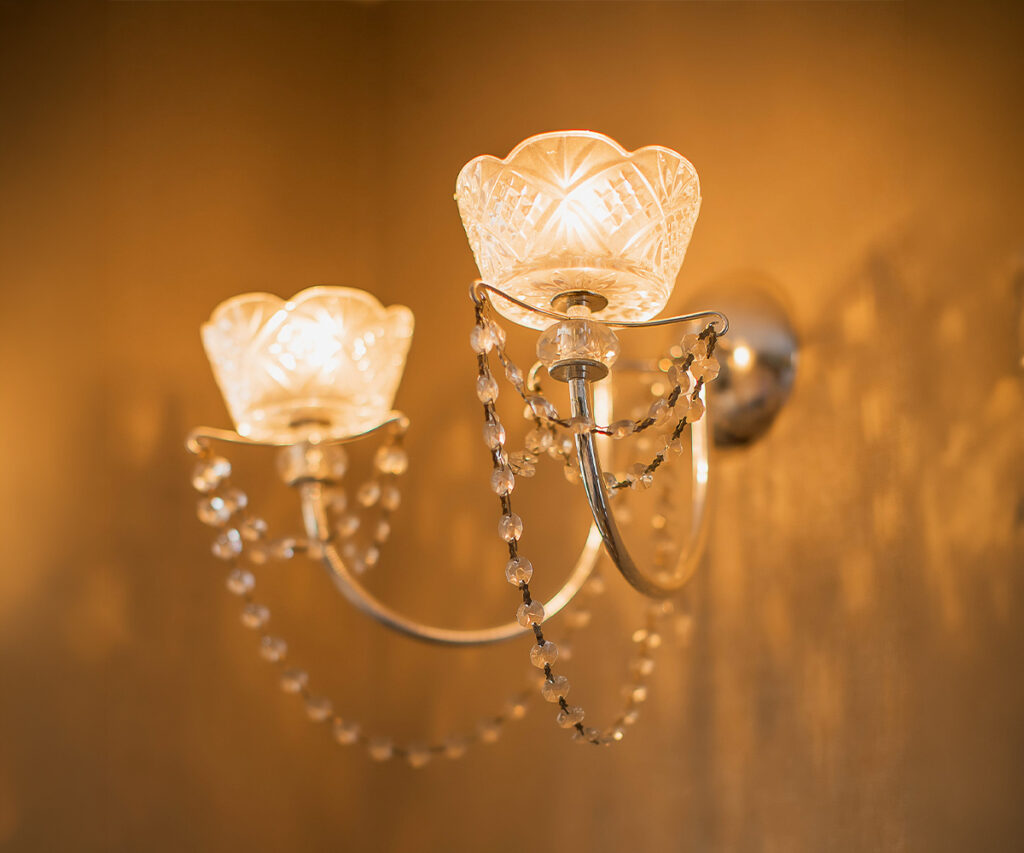
- The Accent Layer: This is where the magic happens. Think wall sconces, a small lamp on a sideboard, or a cluster of candles.
The golden rule is to use dimmers. Being able to dial back the brightness as the night goes on is a total game-changer.
Avoid harsh, cool-white bulbs that give off a sterile look, and stick to warm, soft tones. And honestly, never underestimate the power of a few candles. The flicker of a real flame adds a layer of intimacy and movement.
Add Texture to Make the Space Feel Lived-In
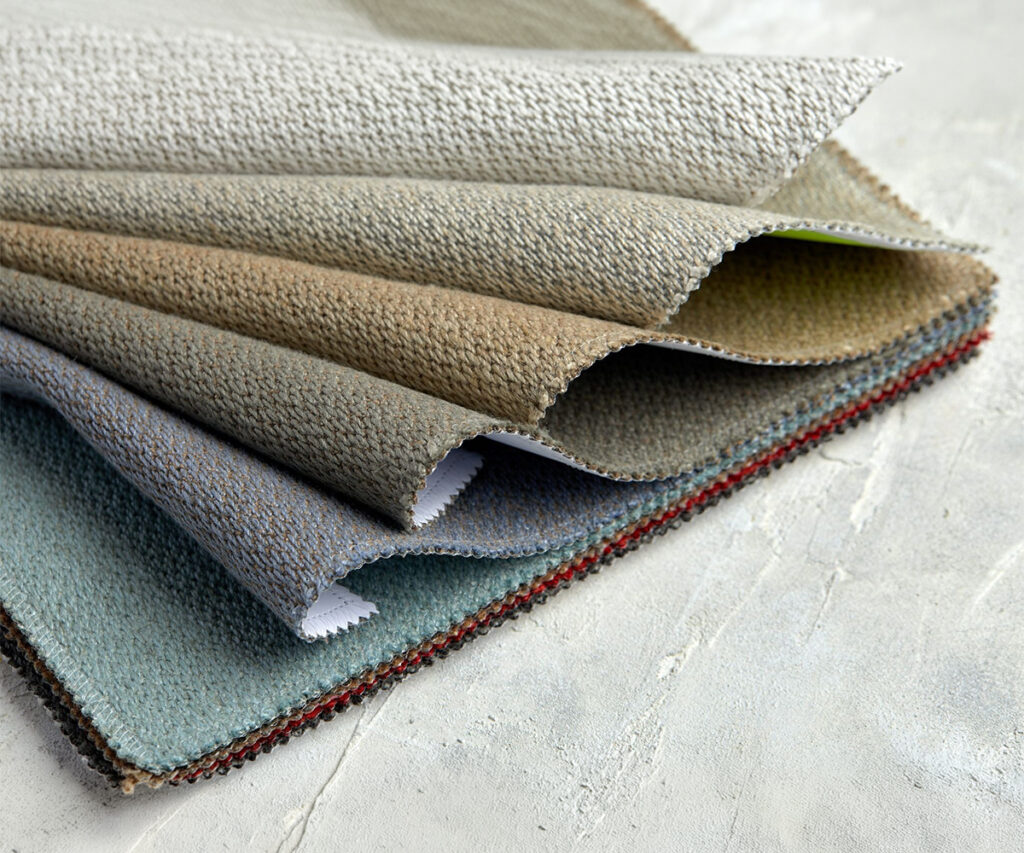
Without texture, even the most expensive furniture can feel a bit two-dimensional and flat. But when you layer different surfaces, you’re essentially giving the eyes – and the body – multiple places to relax.

An area rug is usually the best place to start because it physically anchors the dining zone and instantly kills that floating furniture look. Beyond just being soft underfoot, a rug acts as a visual and acoustic dampener, making the whole room feel more grounded.
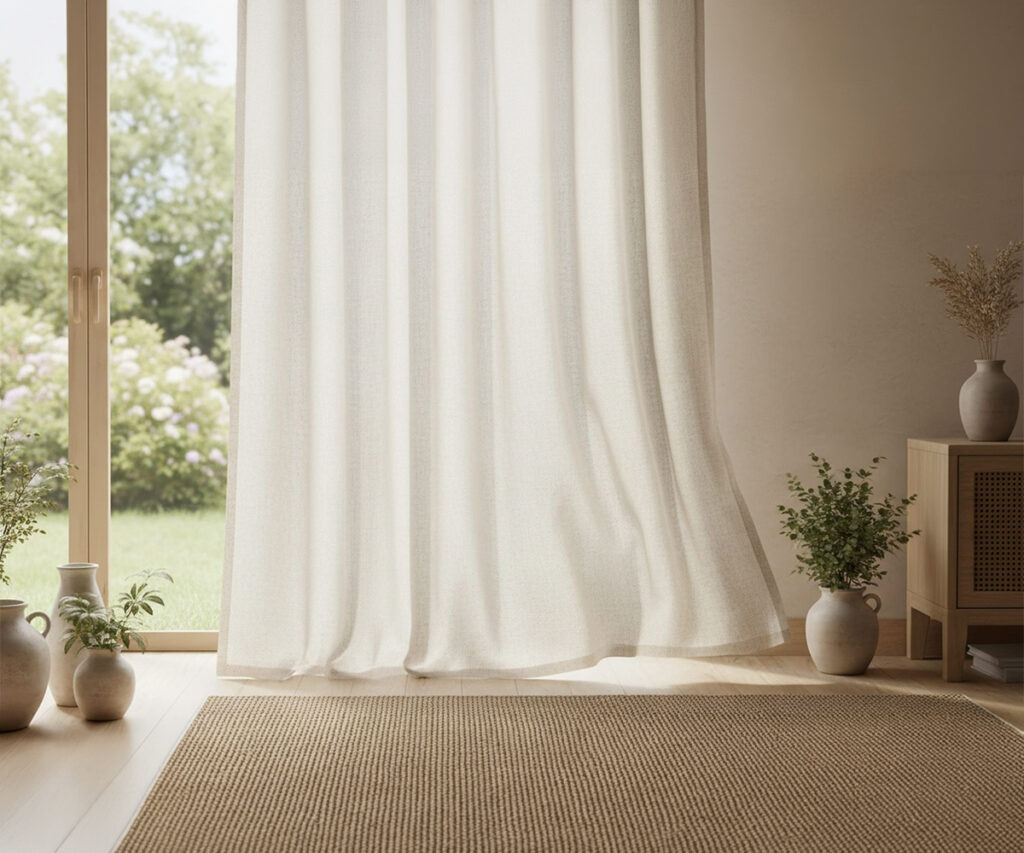
You can carry that softness upward by adding floor-to-length curtains or drapery, which frame the windows and break up the hard lines of the walls.
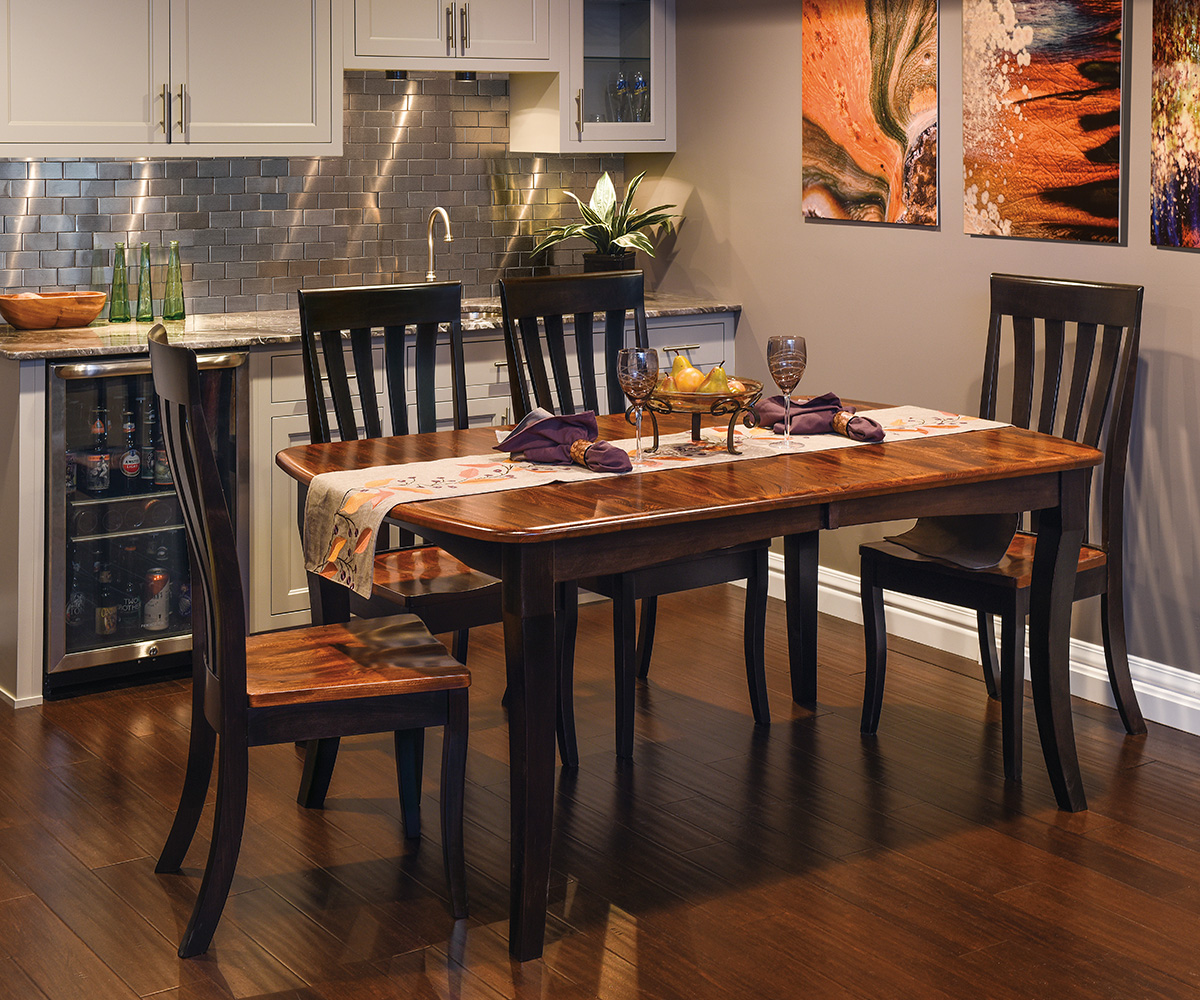
To really get that cozy, lived-in feel, don’t overlook the smaller details like table linens. A simple linen runner or a set of textured cloths adds a layer of approachability to a solid wood table.
Decorate the Table & Surroundings Thoughtfully

The goal here isn’t to create a decorative obstacle course that guests have to peek through to see the person sitting across from them. You want your table styling to be intentional and low-profile.
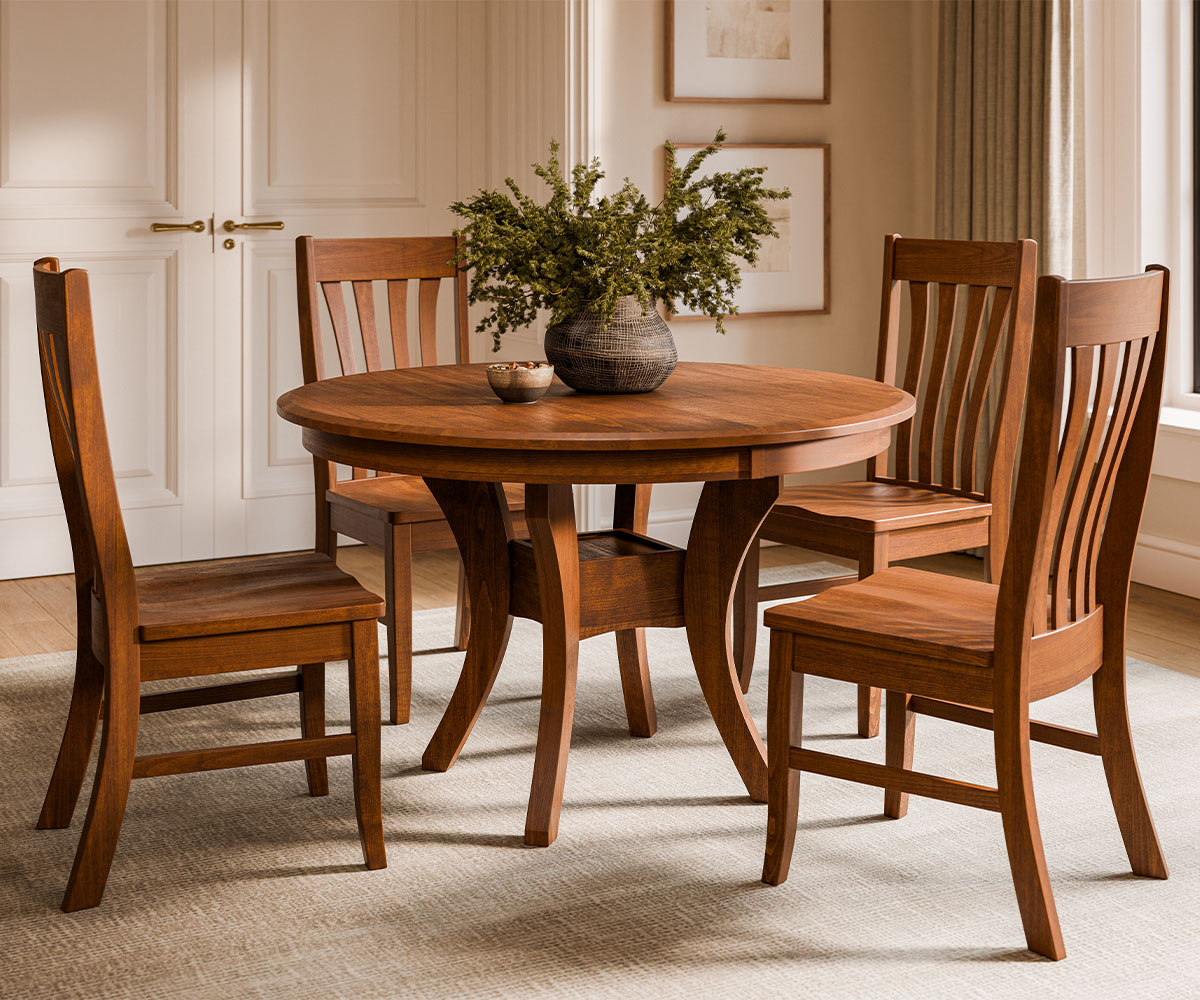
Consider adding a centerpiece such as a simple ceramic bowl, a few staggered candlesticks, or seasonal greenery.
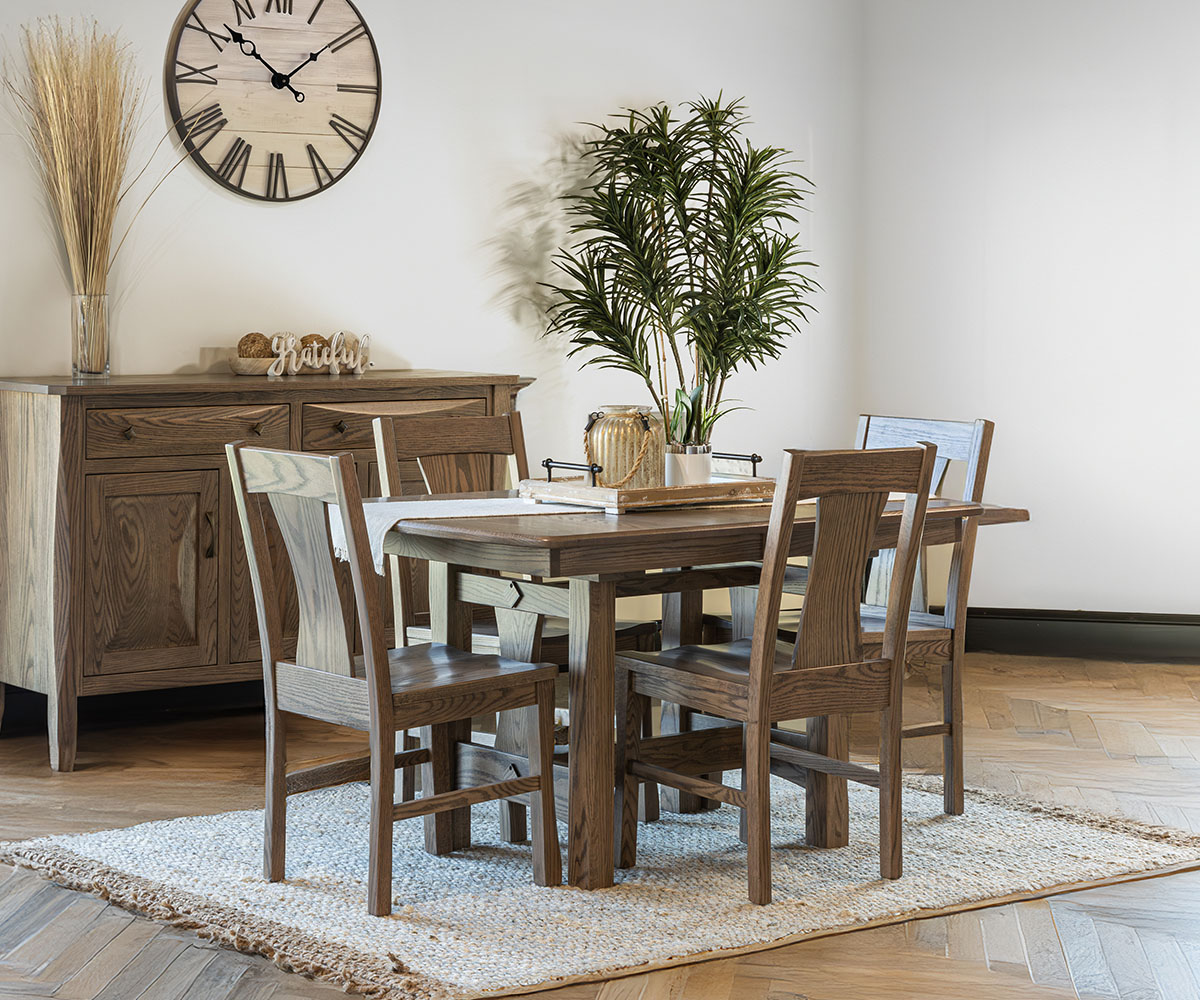
If you have the space, a solid buffet or a vintage-style hutch is a massive win for both function and style. It gives you a dedicated spot to tuck away the special dishes while providing a surface to style a lamp or a stack of art books.
Optimize Layout & Flow
There should be enough breathing room between the back of a chair and the wall that allows someone to slip out for a refill without making three other people stand up.
Don’t overlook the “centering” effect. Your lighting should be the North Star of the room, positioned precisely above the table’s center. This simple alignment anchors the entire layout and creates a sense of symmetry that’s incredibly soothing to the brain.
Common Mistakes to Avoid
Even with the best intentions, it’s easy to accidentally suck the life out of a dining room. Here’s a quick list of vibe-killers and how to fix them.
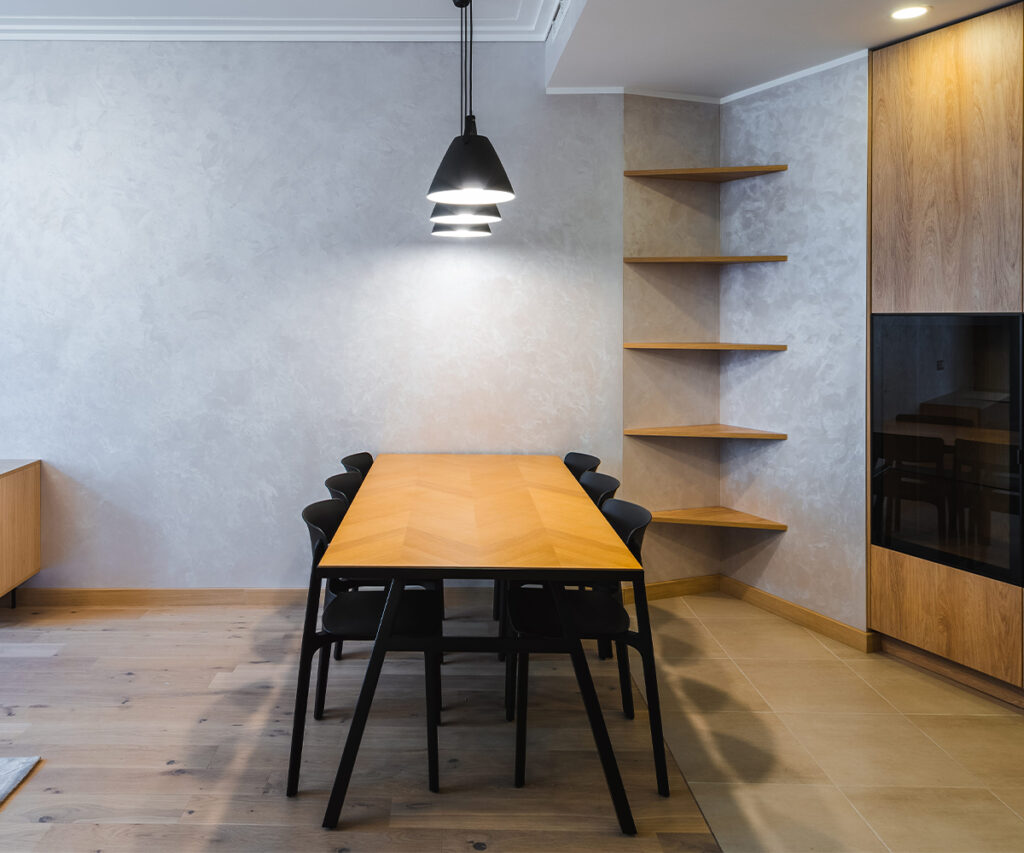
- Harsh Lighting: If your overhead light is so bright that it makes people squint, it works against everything else you’re trying to create.
The Fix: Swap your bulbs for warm white and install a dimmer switch. If that’s too much DIY, just turn off the big light and scatter three lamps around the room.
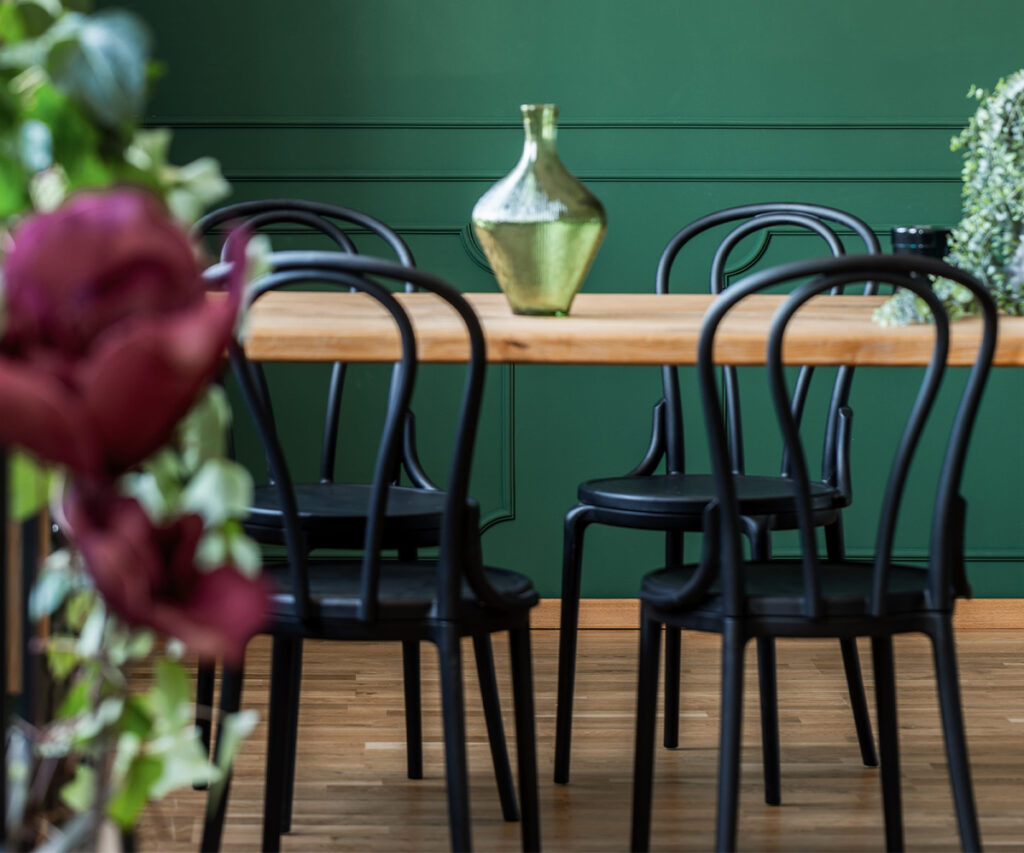
- The “Beauty is Pain” Chairs: Uncomfortable seating is a polite way of telling your guests to leave.
The Fix: You don’t need new chairs; just add high-quality tie-on cushions or a sheepskin throw to soften the blow.
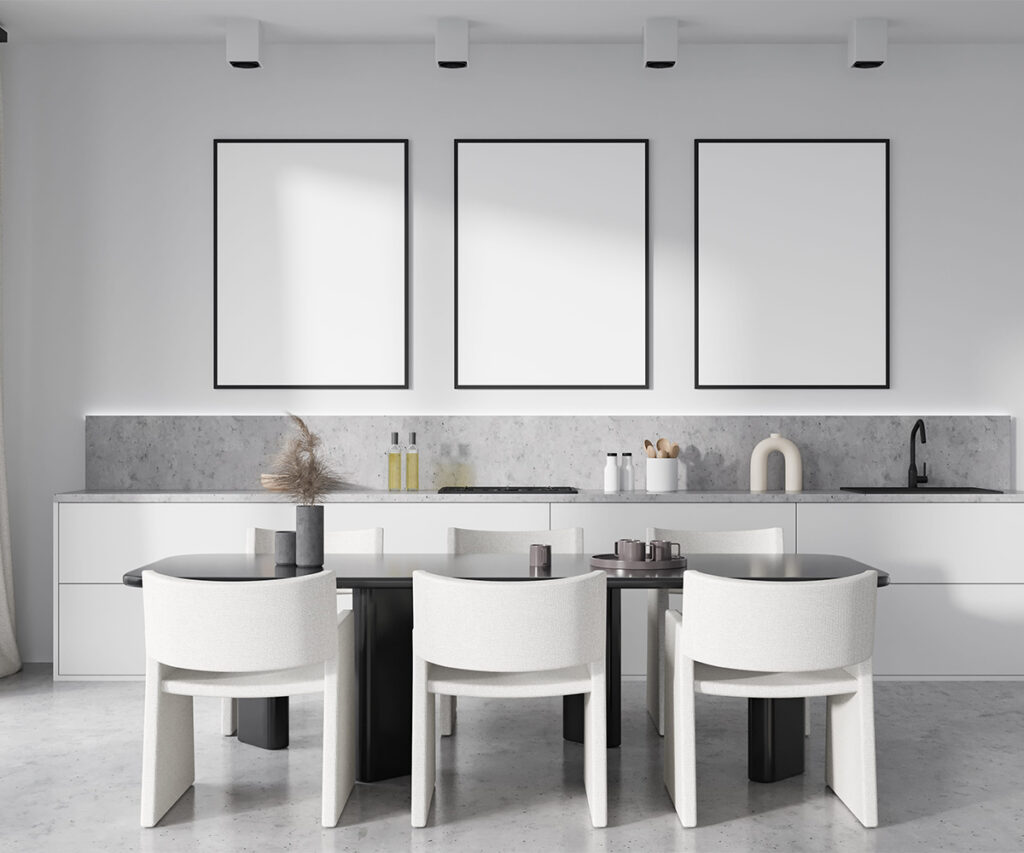
- The Too Perfect Setup: Buying a matching set (table, chairs, sideboard, mirror) makes the room look like a furniture store floor.
The Fix: Break the set. Swap out the two end chairs for something upholstered, or change the hardware on a matching sideboard to give it some individual character.
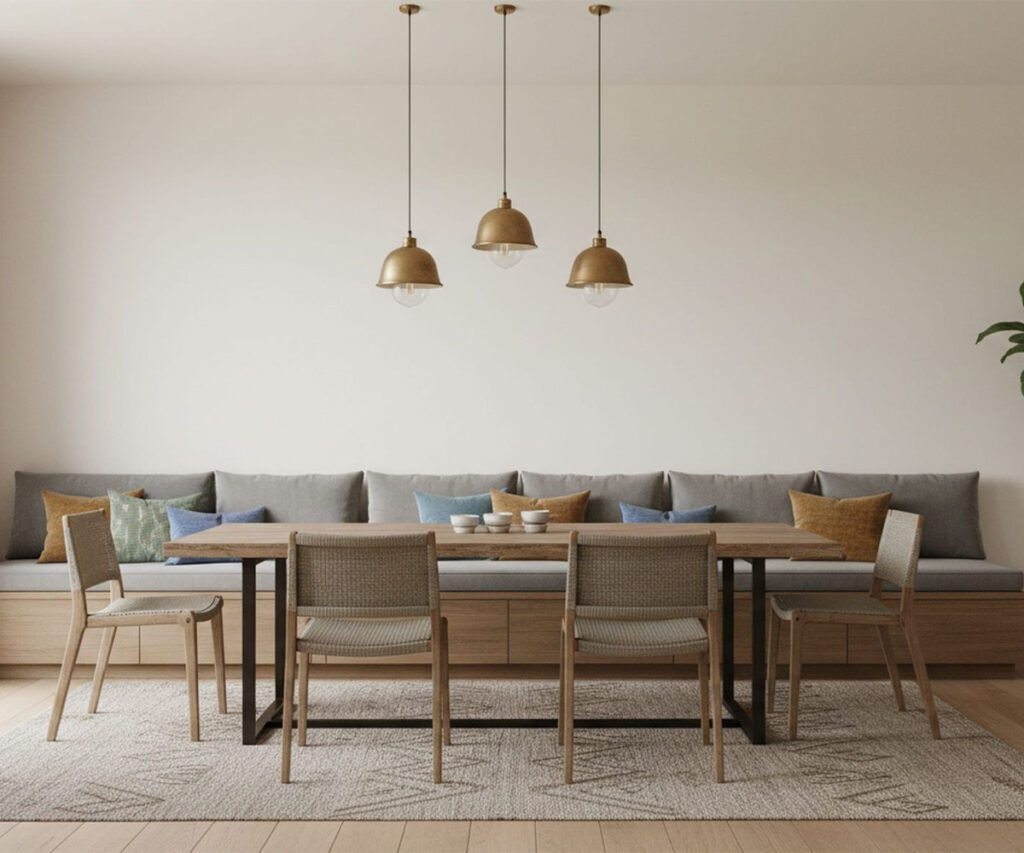
- The Sterile Palette: Too much gray and stark white can feel clinical and uninspiring.
The Fix: Bring in “earth” elements. A wooden bowl, a jute rug, or even a few terracotta planters will instantly warm up a cold room. McKenzie Milhousen, owner of George Collective, shares with Elle Decor that people tend to prefer moody palettes because they look “enveloping and intimate for special dinners.”

- The Clutter Trap: If your dining table is currently piled with Amazon boxes and school forms, it’s not doing its job.
The Fix: Clear the decks and replace the chaos with a single intentional item, like a tray or a vase. If it doesn’t serve the meal or the mood, it doesn’t belong there.
Start With Oak Creek, Finish With a Room People Stay In
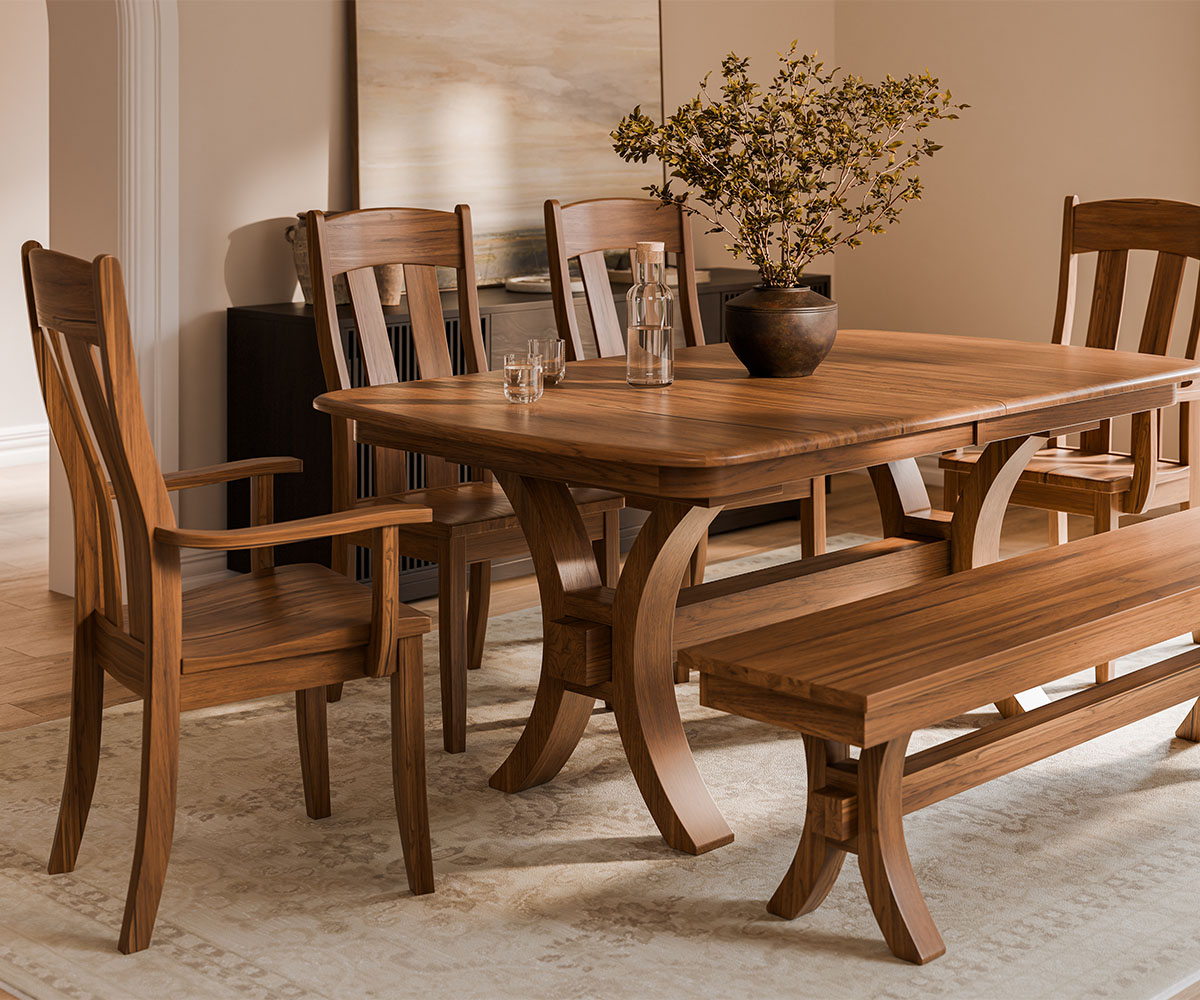
Creating a warm, welcoming environment is a slow build of intentional choices. It’s the way a textured rug deadens the echoes, how a dimmer switch softens the mood, and how a comfortable chair makes a three-course meal feel like a breeze.
But all those layers need a foundation that can carry the weight of real life. This is where Oak Creek Furniture comes in.
We believe that high-quality furniture is the soul of a home. When you start with a solid, heirloom-grade table (the kind with a deep grain and a story to tell), the rest of the room just falls into place.
Ready to design a dining room that feels as good as it looks? Contact us today or explore our collection of dining room furniture designed to complement your home!